The Sistine Chapel is one of the most famous rooms inside the Vatican. The reason of this is because of the treassure that is inside the chapel, the paintings made by Michelangelo Buonarotti.
At the end of the fifteenth century Buonarotti was, indeed, one the most brilliant artist in Florence. He was such a celebrity, whose ability to work with marble did not know rival. In fact, "The Pietá" was considered a masterpiece at the end of the fifteenth century.
At the begining of the sixteenth century, the Pope Julius II was very busy to built the Saint Peter's Chuch. Furthermore, the Pope wanted to conclude the renovation of the Sistine Chapel which have started a century before.
The most excelsiors paintings of the Italian Renaissance, included Sandro Boticelli, Domenico Guirlandaio and Pietro Perugino, have painted several themes alongside the walls of the Sixtine Chapel. It only remained the ceiling to finish the works. At first, Julius II thought on Rafaelo Sanzio, although Bramante who was working for the Pope as his former arquitect, suggested the name of Buonarotti as the perfect man for the work.
When Michelangelo heard that the Pope himself had a job for him, he was very proud, so he went to Rome at once. Nevertherless, when the Pope told Buonarotti that he was chosen to paint the Sistine Chapel ceiling, the artist was reluctant to take on the work. That was a terrible offense, because he was a sculpture, not a painter.
Despite the terrible start, Michaelangelo decided to accept the work. The ceiling was painting from 1508 to 1512. Buonarotti worked all that time alone, because he thought that no one else could do what he does.
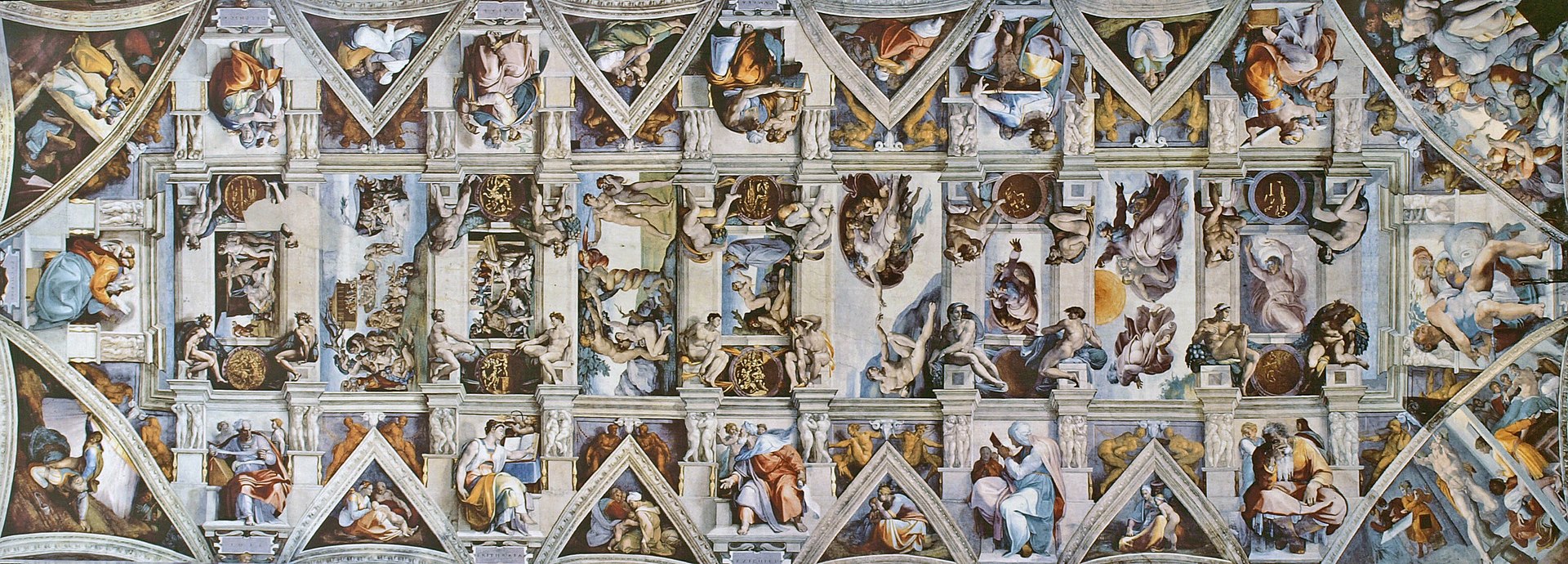
The main topic of the ceiling was the begining of the human race. Although most of the scenes were related to the Bible, that was the perfect excuse for Michaelangelo to pay tribute to the human body.
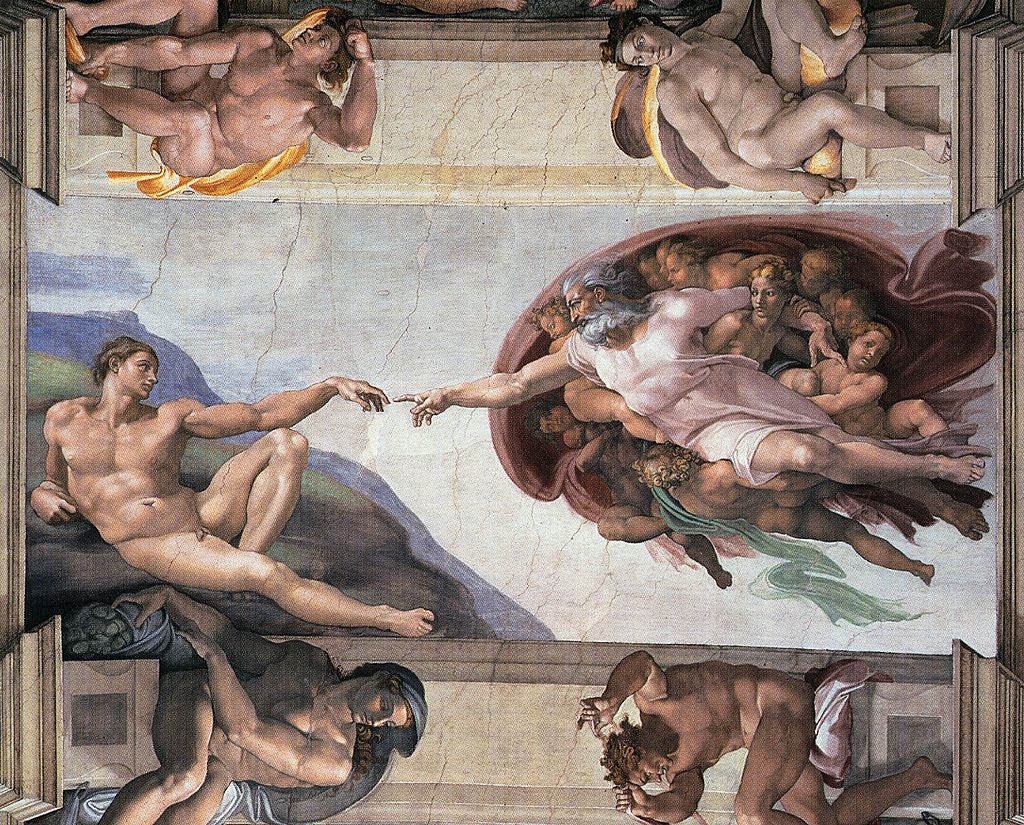
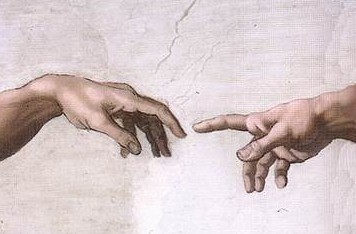
One of the most impresive frescos is "The creation of Adam". The first man is lay with his left hand up, waiting for God who is going to turn up the button of life.
This is the iconic image of the hand of God giving life to Adam. It is such a powerful image, to conect a human being with God. Alongside "the creation of Adam", another important scene is "The creation of Eve".
In "the creation of Eve", Adam is asleep while Eve emerged from Adam's cloak. The story of Adam and Eve continues with "The original sin" and their expulsion from the garden of Eden.
There are also, other narrative stories we can see on the ceiling. The creation of Earth and the Sun, or God separiting the waters from the heavens.
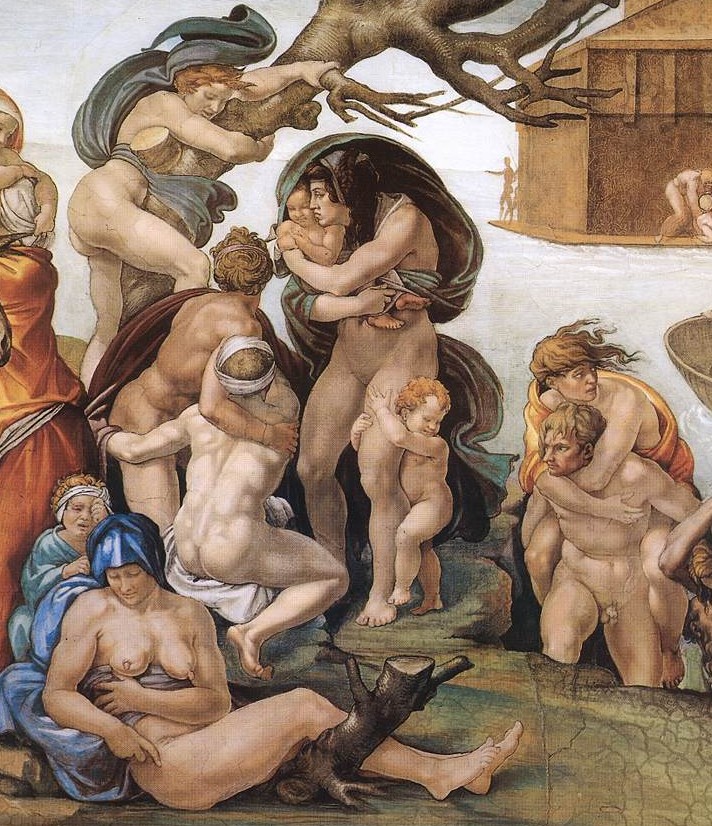
Furthermore there are several scenes from Noe story. The most important of all, the topic about the Great Flood.
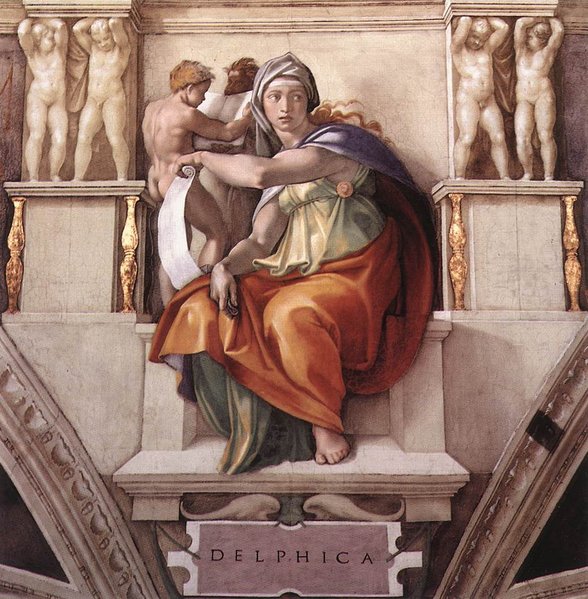
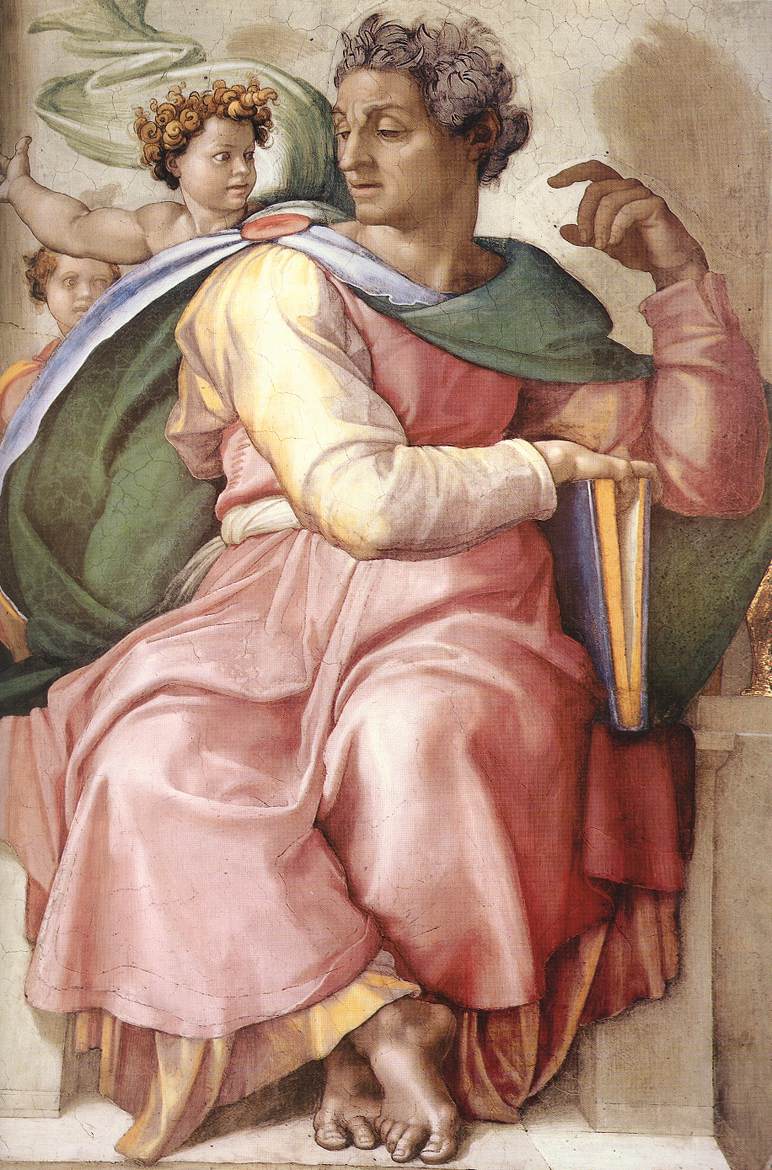
Apart from the narrative scenes, the decoration of the ceiling is complete by a group of prophets and sibyls. Both are very important characters because they foretold the coming to the Mesiah. You can see some images below:
Michelangelo finished the ceiling in 1512. Although he returned to the Sistine chapel again in 1536 to paint The Last Jugdment, but that is a story to tell in another time...
The Eiffel Tower is one of the most important monuments of Paris. In fact, it is more than a monument, it's something else, a symbol of the city itself.
It was building by Gustave Eiffel in 1889. Monsieur Eifeel was an engineer who build brigdes made of steel throughout France and other european countries during the second half of the ninettenth century.
Here you can see a photograph of Gustave Eiffel. The picture was taken by Nadar a ver famous photographer in France.
Below you can see one of the Eiffel's brigdes. This one is in Biarritz.
1889 was, indeed, a special year because it was the conmemoration of the triumph of the French Revolution. Therefore, this aniversary clashed with the International Exhibition. This event started in London in 1851 and since then took place every five years or so in a different city each time.
This is a postcard of the International Exhibition in Paris.
For the French exhibition, their personel staff considered that it was a great idea to built a very special monument. Although Eiffel wasn't the first choice for the project, he worked hard since the begining to get the job. Though there were some rumours that he was very good contacts in the goverment that should helped him to get the job as well.
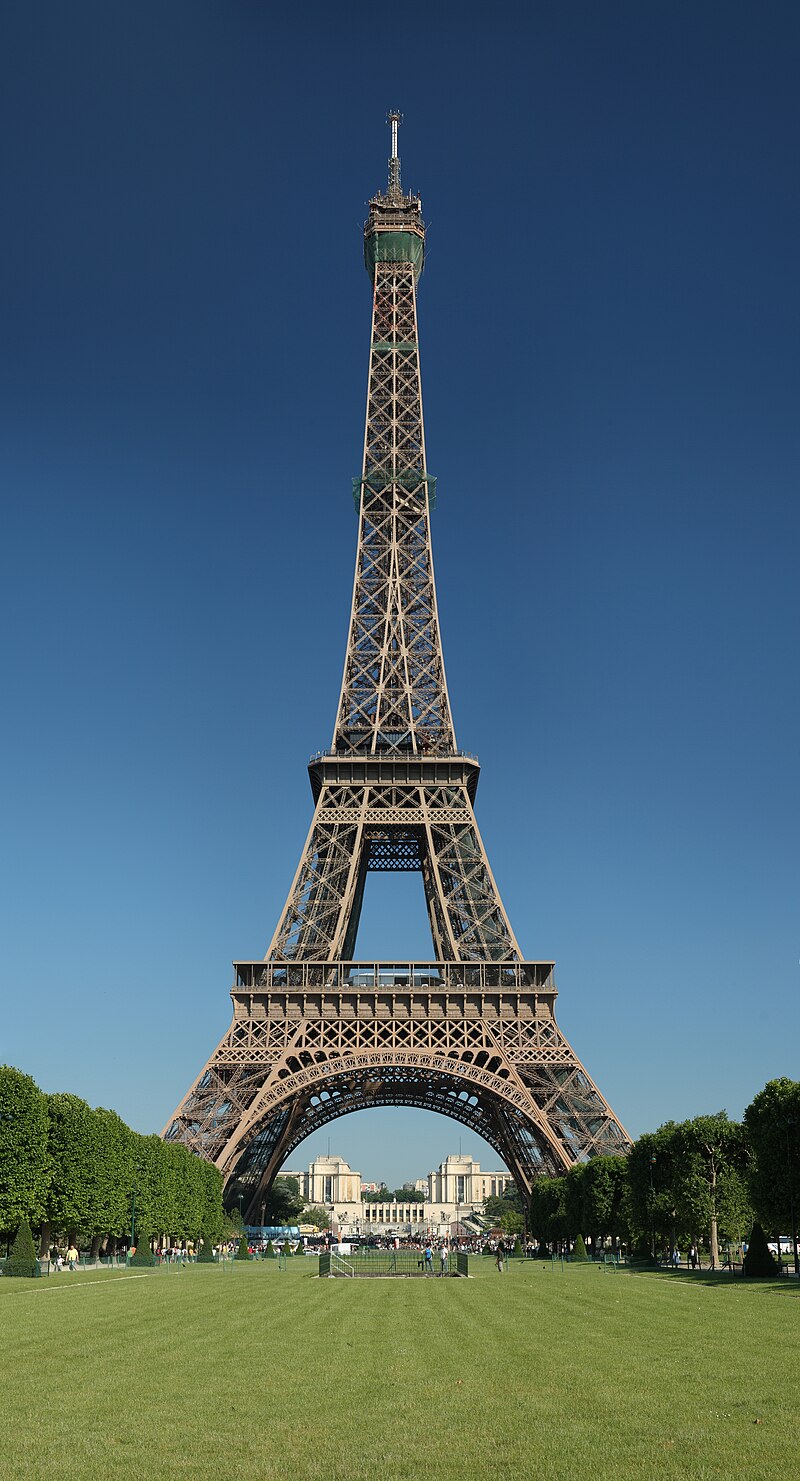
Gustave Eiffel designed an enormous tower made of iron. In the picture below you can see the structure's tower with all the detalis.
The most amazing thing about the tower was it's structure that it looked like as a framework instead of a building. It seemed that the monument was unfinished. And that what made most of the people rejected this "new monument".
Despite of the opinion of the Eiffel's contemporaries, most of them hated the tower since the begining, the Eiffel Tower soon became the most important tourist attraction during the celebration of the international exhibition. Everybody who came to Paris those days, wanted to visit the tower and checked out if it was so ugly than everyone said.
Moreover, when the international event was finished, the Eiffel Tower remained to stay. During the First War World it was used as a radio broadcasting.
Nowadays it is not only a monument that people from all over the world should visit every year. It is also a symbol of freedom and hope. And the image of a city that everyone can reconogize all over the world.
The Eiffel's masterpiece has also inspired to several artists who have painted it in differents ways. Here are some examples:
The Eiffel Tower by George Seurat 1889.
The Eiffel Tower by Henri Rousseau 1898
The Eiffel Tower by Robert Delaunay 1911
For further information you can watch these links:
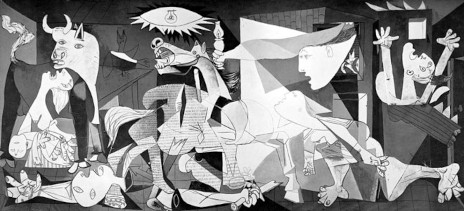
The Guernica was painted by Pablo Picasso between May and June of 1937.
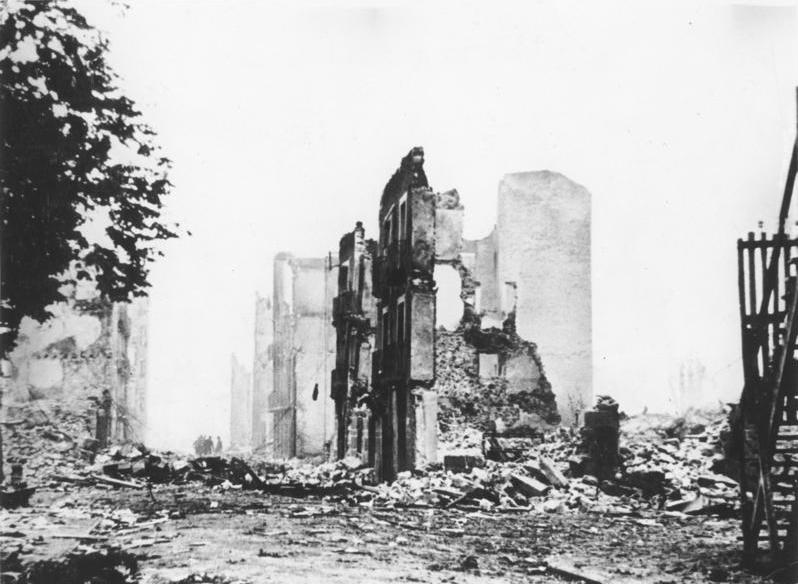
At the begining of the Spanish Civil War, there was a tremendous incident in a small village of the north of Spain. In April 26th 1937 the inhabitans of Guernica suffered a terrible attack. A group of airplanes from german and italian army attacked the village. All the buildings were destroyed and a lot of people were killed or injured.
Guernica's buildings after the attack
The incident was noticed in all the newspapers throught the world. Even Pablo Picasso read about it at The L'Humanite where the Guernica's situation appeared in that publication in April 28th. At that time, Picasso was working in a picture for an international exhibition of art in Paris. However, the spanish artist didn't know what to do for that exhibition. Only after read the incidents in Guernica, Picasso realised that it was a great topic for a painting.
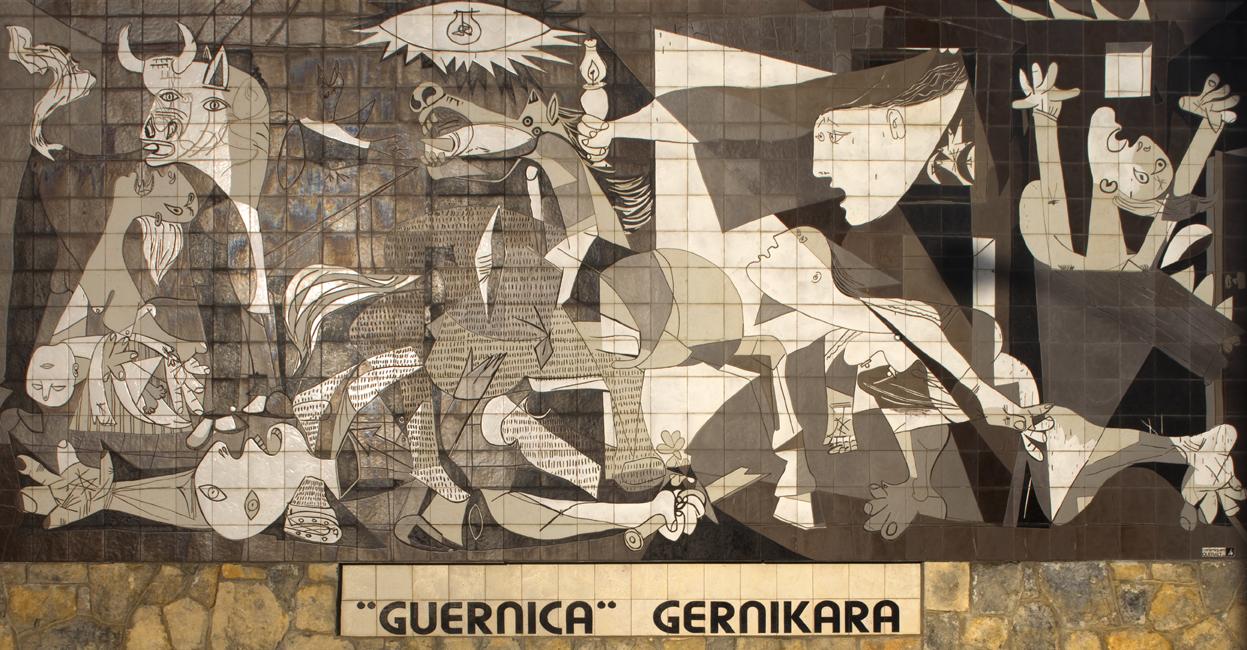
What can you see in the Guernica? Well if you pay attention you can see six human beings and three animals.
On the left side of the painting, there is a mother holding the death body of her child. The woman seems to be screaming and her image is quite dramatic. Next to the woman there is a bull which is one of the favourite topics that Picasso ussually draw in his art works. Bellow the mother you can see a young man. This is called the death soldier.
In the photograph above there is a detail which show you the hand of the death soldier. His hand is holding a break sword. You can also see a flower which is a symbol of hope.
In the right side of the picture there is a man whose arms are up in the air. He is probably asking for mercy.
Next to this man there is a woman holding a lamp. There is also another woman who is kneel down with a bad injure on her arm and her leg broken. Finally, in the middle of the picture you can see a horse that is a metaphor of the victims of the war.
The Guernica was exhibited in the International Exhibition of Art in Paris with a great success. In despite of the great drama, Pablo Picasso didn't do a direct conection to Guernica or the Spanish Civil War. Thereby, the Picasso's masterpiece has been related with all the tragedies and wars that humanity has suffered along the twenty century. Furthermore, this picture is a symbol of hope. You can see that in the brigth light that show up from the inside to the outside of the painting.
When the Spanish Civil War ended and a new goberment began in Spain, the Guernica couldn't return to Spain. Moreover, the artist himself said that his painting didn't return until there was a change in the political situation.
The Guernica finally arrived at Spain at the begining of the eighties. The Casón del Buen Retiro was the first place where the Guernica was exhibited in our country.
The Reina Sofia Museum front door
Then in 1992 the Picasso's masterpiece was trasladated to the Reina Sofia Museum. This is the place where everyone can visit the painting.
This year it's the eightieth anniversay of the Guernica. For that reason there is a special exhibition at the Reina Sofía Museum.
Also, if you are interested, here is a video about the Guernica.
This other video is about a song that a spanish group, Vetusta Morla, sing inside the Guernica's room to celebrate it's aniversary.
The Vetusta Morla's song is a part of project called "Suena Guernica". This project has been promoted by Radio3 with the participation of a differents spanish singers. Here are other videos from the project.
For further information about Guernica try this links:
Hace unos meses utilicé un corto animado sobre la obra de Pollock en una de mis clases de Fundamentos del Arte II. A mis alumnos les gustó mucho porque auna dos máximas importantes:
1-Es ameno y entretenido.
Y 2-La conexión que existe entre los distintos periodos artísticos y cómo el arte del pasado influye en el arte del presente.
Por este motivo, esta entrada se plantea como objetivo la selección de algunos cortos de animación que se rinden homenaje a artistas o se inspiran en determinados movimientos o tendencias. Espero que os guste.
Una declaración de amor a la obra de Jackson Pollock
A mediados de los cuarenta se produce el encuentro entre dos genios: Salvador Dalí y Walt Disney. El resultado fue el corto Destino que, si bien ha tardado en ver la luz, es el claro ejemplo de cómo los cuadros de Dalí cobran vida.
Dreams of Dalí nos propone un acercamiento diferente a las pinturas del genio de Cadaqués. Abandonamos la poesía transmitida en Destino para meternos, literalmente, en sus cuadros mientras escuchamos la voz del propio pintor.
Tambien el antiguo Egipto nos desvela sus secretos a través de la animación
Stone Age es un divertido corto que nos enseña cosas sobre la Edad de Piedra, la convivencia, el fuego, los inventos, el comienzo de la civilización...
Aprovechando que estamos de aniversario, aquí os dejo una animación del Guernica
Los cuadro de Van Gogh cobran vida en este corto
No me puedo resistir...la pantera rosa trasteando con la obra de Leonardo da Vinci!!!
El jardín de las delicias es el título de una de las obras más conocidas de El Bosco. También de un corto que nos permite adentrarnos en el universo del singular artista
The scream utiliza el famoso cuadro de Munch como pretexto para contarnos una historia.
En ocasiones las grandes obras maestras sienten vergüenza de sí mismas...
En este corto los seres que Joan Miró refleja en sus obras cobran vida
En los siguientes cortos os propongo un paseo por los universos de Kandinsky y Mondrian
El poema de Miguel
Hernández es el punto de partida de la nueva exposición de Adolfo Revuelta.
La
muestra, que podrá visitarse hasta el próximo 30 de abril en lecrác
Centro Cultural Antigua Cárcel de Palencia, reúne un conjunto de piezas
que rinden homenaje a tres grandes Migueles de la Literatura Española: Miguel de
Cervantes (1547-1616), Miguel Hernández (1910-1942) y Miguel Delibes (1920-2010)
El más veterano
de los tres, en cuanto a periodo vital se refiere, se encuentra representado
por sus inmortales criaturas. Don Quijote y Sancho Panza parecen querer
entablar una conversación. Posiblemente discutir una nueva ruta en la que poder
continuar sus aventuras.
Sancho y Don Quijote (2017)
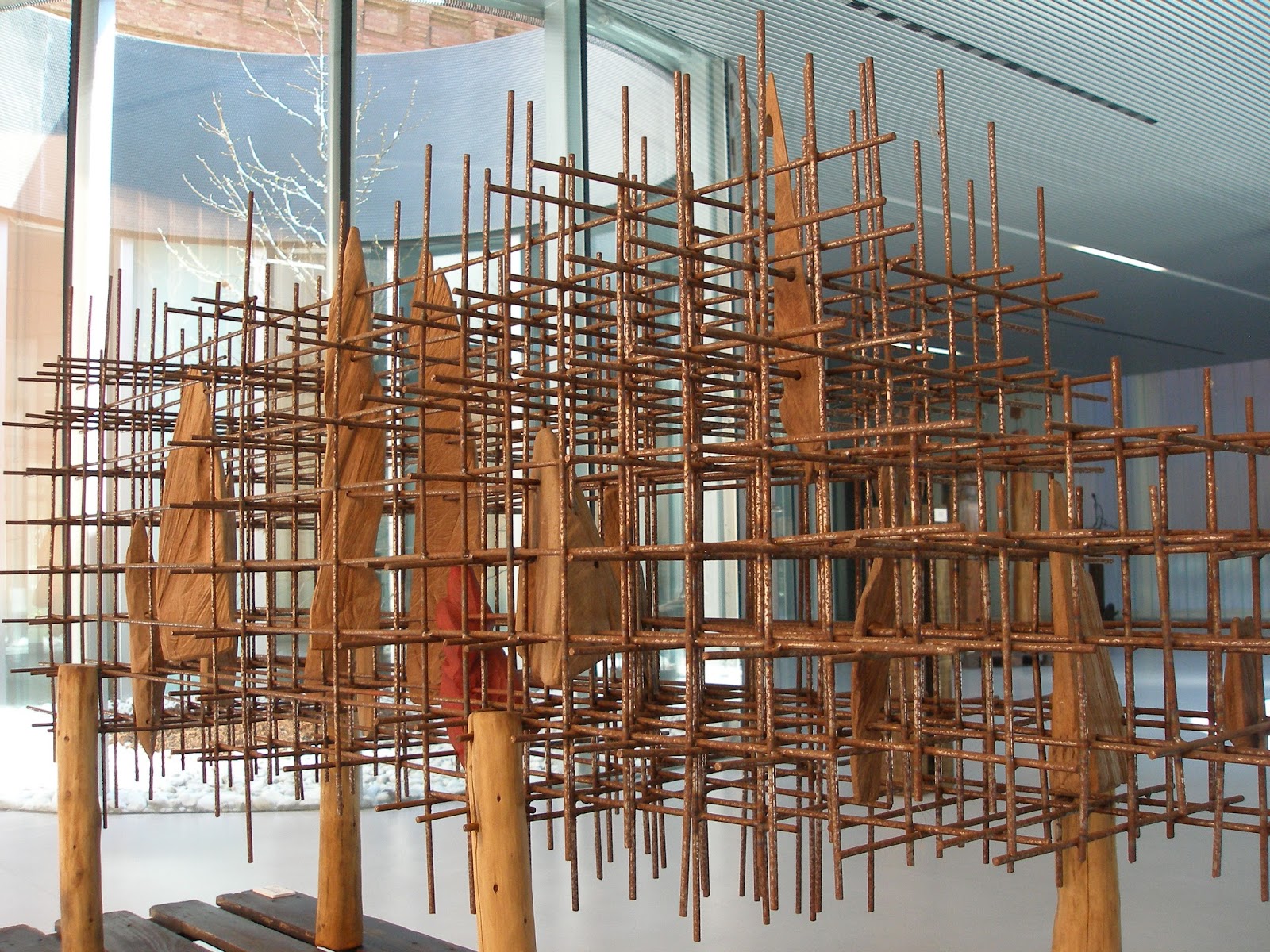
Las piezas en hierro ensamblado y soldado sobre
madera, revelan una pareja de buenos amigos, de aquellos que seguirán al pie
del cañón combatiendo con valor los avatares de la vida. Un diálogo que, sin
embargo, no es privado pues está siendo observado por Dulcinea (hierro soldado
y ensamblado) que se eleva grácil y ligera, a medio camino entre el cielo y la
tierra.
Dulcinea (2017)
Pero estos
héroes inmortales no están solos. Al fondo de la sala el visitante a la
exposición se encontrará cara a cara con Sí
son desaforados gigantes. Una pieza de madera de gran tamaño que alude a la
mítica frase que ilustra el enfrentamiento con los molinos de viento. En este
caso símbolo de los miedos, reales o no, que alberga nuestra mente.
Sí son desaforados gigantes (2017)
En el
tramo central del espacio expositivo encontramos el homenaje a Miguel Delibes. Pasaje para una dama (varilla de acero
soldada, madera) conecta con la novela Señora de rojo sobre fondo gris que el
escritor vallisoletano escribió poco después de la muerte de su esposa.
Paisaje para una dama (2008)
Paisaje para una dama (detalle)
El resto de las
piezas: Espíritu de Castilla II (madera, canto rodado), El
Camino (herramientas ensambladas, madera), El Espíritu del Páramo (madera,
hierro) y Madre tierra (madera, barrenos), ofrecen una mirada a las
raíces.
A los recuerdos de la infancia y adolescencia en un pueblo cualquiera de
Castilla, donde el tiempo y las estaciones se marcaban a fuego con el único
calendario posible de las tareas del campo. Recuerdos que nos retrotraen a una
vida más sencilla alejada de la esclavitud tecnológica del siglo XXI.
Espíritu de Castilla II (2001)
El Camino (2017)
El Espíritu del Páramo (2017) con Paisaje para una dama de fondo
Madre Tierra (2004)
El último autor,
o el primero según se entra en la exposición, es Miguel Hernández. El poeta de
la generación del 27 estuvo preso entre, septiembre y noviembre de 1940, en la
cárcel palentina. El destino ha querido que, casi 77 años después, retorne al
mismo espacio. Si bien la connotación es diferente pues ahora la antigua cárcel
ha sido reconvertida en un lugar para que la cultura pueda tener su espacio
siguiendo la estela emprendida en centros similares en otras ciudades como, por
ejemplo, Salamanca.
El
espíritu de Hernández se hace visible con las piezas: Me pone alas (hierro
ensamblado y soldado), Para la libertad (elementos
agrícolas y madera), El segador (madera, hierro) y Triple
diosa (madera, cencerros indios) Cada una de ellas refleja el amor a la
vida que, pese a las circunstancias, demostraba el poeta alicantino.
De todas
ellas llaman poderosamente la atención El segador y Triple diosa. La primera
con su doble significado, referencia a las tareas agrícolas y la muerte. La
segunda conectada con las tres heridas que marca el poeta: la del amor, la de
la muerte y la de la vida. Heridas que ineludiblemente afectan al ser humano a
lo largo de su periplo vital.
El segador (2016)
Triple Diosa (2000)
La exposición se completa con un vídeo en el que diferentes personas relacionadas con Adolfo Revuelta ofrecen una breve semblanza de su trabajo como escultor.
Datos de interés:
Con Mayúscula. Adolfo Revuelta Esculturas.
Del 3 al 30 de abril del 2017. LECRÁCCentro Cultural Antigua Cárcel. Avda. Valladolid, 26, Palencia.
Sobre las fotografías que acompañan al texto, realizadas por Laura Antolín Esteban en el lugar de exposición.
.jpg/1920px-Michelangelo_-_Creation_of_Adam_(cropped).jpg)







.jpg/1024px-Michelangelo's_Piet%C3%A0%2C_St_Peter's_Basilica_(1498%E2%80%9399).jpg)



.jpg/1024px-The_Creation_of_the_Sun_and_the_Moon%2C_Michelangelo_(1508-1512).jpg)




3.jpg)
5.jpg/1280px-Mural_r%C3%A9plica_del_Guernica_en_Santiago_de_Chile_(Costado_Liceo_7_de_%C3%91u%C3%B1oa)5.jpg)
4.jpg/1280px-Mural_r%C3%A9plica_del_Guernica_en_Santiago_de_Chile_(Costado_Liceo_7_de_%C3%91u%C3%B1oa)4.jpg)
_03.JPG/1024px-Madrid_-_Museo_Nacional_Centro_de_Arte_Reina_Sof%C3%ADa_(MNCARS)_03.JPG)